
Recently, a small team from Divine Mercy Australia travelled to Rome following the recent passing of Pope Francis and the calling of a papal conclave to elect the new pope. This initiative was rather spontaneous, and the team had to very hastily pack its bags, in order to avail our apostolate and supporters of the rare opportunity not only of participate in but to benefit from this remarkable confluence of world-historic events: the funeral of Pope Francis, the in-gathering of the world’s cardinals for a Papal Conclave; the election and inauguration of a new pope (Cardinal Robert Francis Prevost as Pope Leo XIV), all in a Jubilee year in the ancient heart of Catholicism.
The team left Australia with the professional mission of meeting with cardinals from the Indian-Pacific region to discuss and share in DMA’s new initiatives, to garner their support or patronage, and to solicit interest in an exciting, proposed regional event to celebrate the 2000th anniversary of the Death and Resurrection of Our Lord, towards which DMA has already begun preparations.
Habemus Papem! A Succesful Conclave
Pope Francis’ passing on the 21 April meant that, according to canon law, a conclave was to be held at or around 15-20 days hence. It was eventually called, two days’ after Pope Francis’ funeral on 28 April, commencing on 7 May. Of the 135 cardinal-electors around the world – including Australia’s own and youngest cardinal, His Eminence Mykola Bychok– all but two attended. Fortuitously, our team arrived that day, jetlagged and unsure as to how long this conclave might take. In 2013 it lasted only a couple of days, but conclaves in previous centuries had occasionally lasted weeks, or even months.
As it happened, Pope Leo XIV was announced as the 267th Roman Pontiff and introduced on the balcony of St Peter’s Basilica in the early evening of 9 May, in front of adoring crowds gathered in the Square, which some have estimated as around 50,000. Thus, the Papal Inauguration Mass would be scheduled for Sunday 18 May, providentially also the birthday of Pope St John Paul II, the great patron of Divine Mercy. This global event would be attended by most of the cardinals and local clergy, as well as international dignitaries of the highest eminence.
Jubilee pilgrimage and plenary indulgences
With over a week therefore to organize rendez-vous for the chief mission, the team availed itself of the opportunity to visit pilgrimage sites around Rome, especially those which were places connected with the Jubilee. Plenary Indulgences were available each day, under the usual conditions, and so there were throngs of pilgrims enjoying abundant graces at each destination. For brevity’s sake, since we can’t recount every detail, let’s just speak of the key moments:
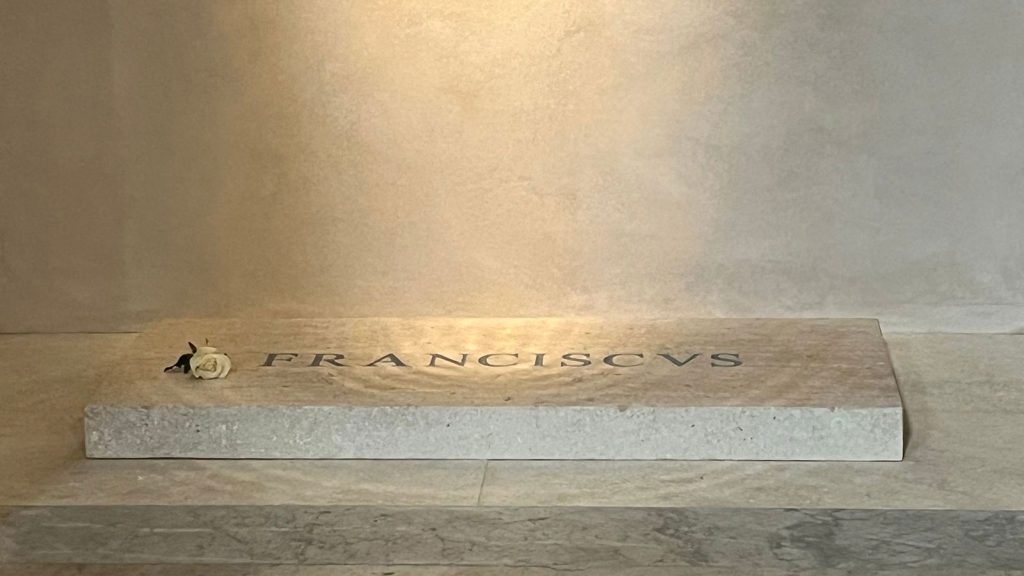
- Visiting all 4 Papal Archbasilicas – St John Lateran, St Mary Major (incl. the white sepulchre of Francis), St Peter’s, and St Paul Outside the Walls – going through the Jubilee Holy Doors of each, participating in the sacrament of Reconciliation (offered all day, in multiple languages!) prayers & adoration, and overhearing various liturgies of the Eastern Churches being celebrated in that Jubilee week;
- Visiting the Santa Spiritu Divine Mercy Shrine, near St Peter’s Basillica
- Going up the Scala Sancta aka Pilate’s Stairs (brought to Rome from Jerusalem by St Helena), on one’s knees
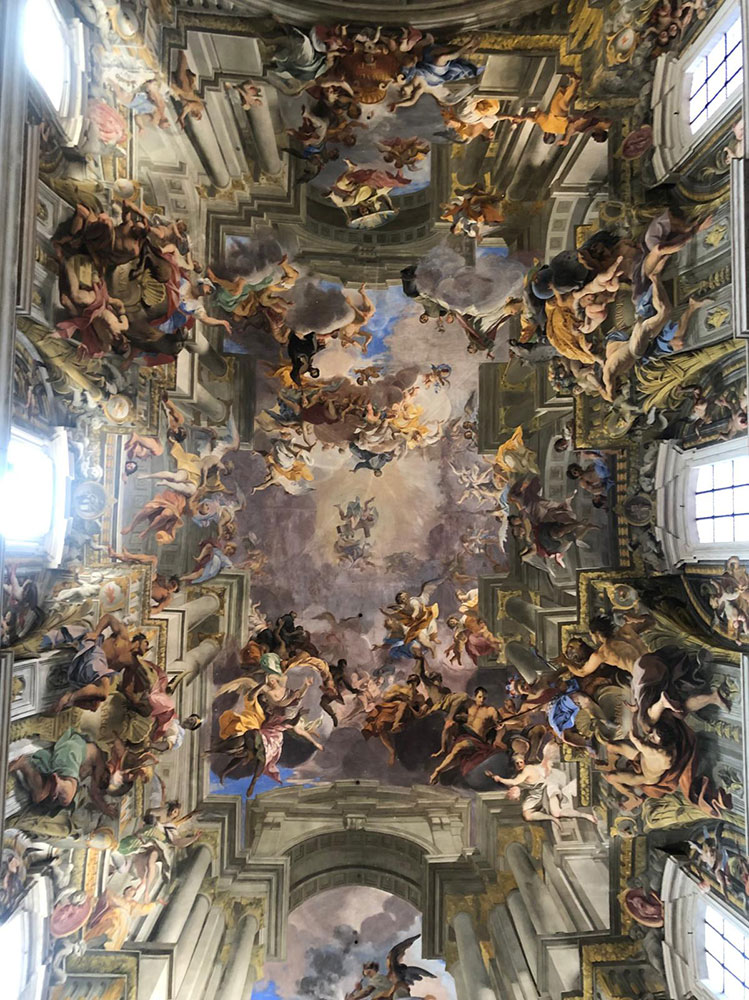
- Visiting Rome’s more famous baroque churches, surrounded with marble altarpieces and sculptures of saints or popes, often above their displayed remains; enormous domes and ceilings overhead, ornamented with frescoes by unparalleled masters of art, giving one an impression of entering heaven itself (See Chiesa St Ignazio di Loyola)
Meeting with Clergy in support of the Divine Mercy message
We were privileged too, to meet with several notable expatriate clergymen. Fr Joseph Roasch, Superior-General of Marian Fathers, Rome, gave us a tour of the catacombs of St Agnes outside the walls, followed by a visit to the extraordinary chapel-mausoleum of Constantina, the daughter of the first Christian Emperor of Rome, Constantine. This was followed by a convivial dinner with the other religious and a tour of the Marian Fathers’ Rome headquarters.
We were also well looked-after by Fr Joseph Hamilton, Rector of Domus Australia and former private secretary to the late George Cardinal Pell. After a brief visit of Domus Australia, Fr Hamilton secured for us further meetings with clergy there, concluding with an early evening English Mass in the lovely chapel, replete with magnificent paintings and some Australiana visible to any keen-eyed antipodean.
It was also a privilege to enjoy a lunch meeting with Melbourne’s own man in the Vatican, Fr Andrew Kwiatowski, a young priest who is now well established at the Vatican Secretariat.
Meetings with cardinals
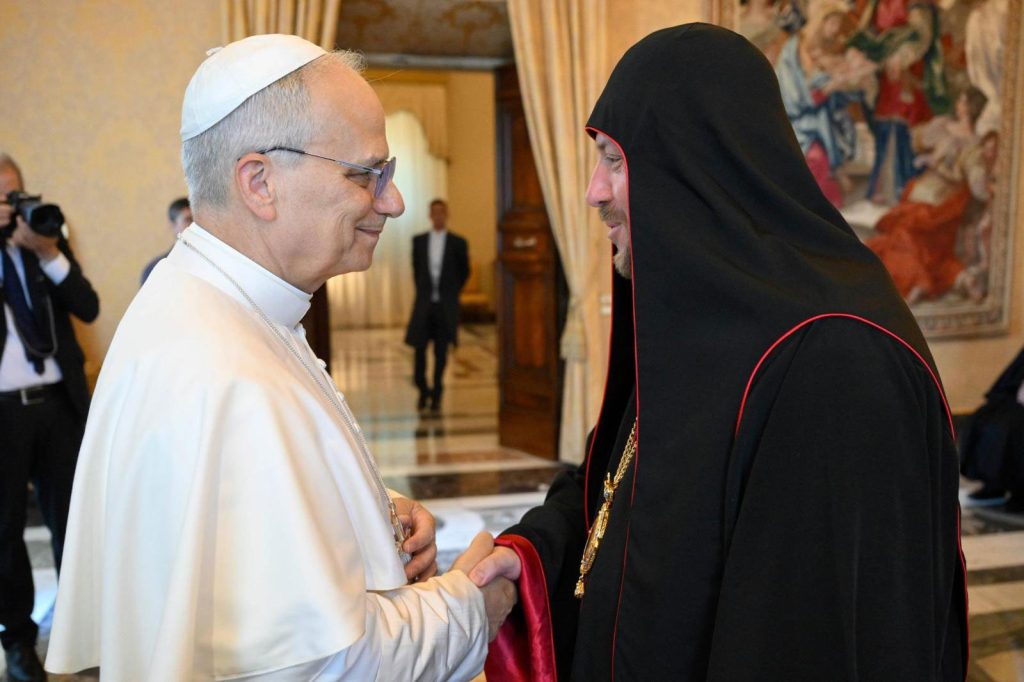
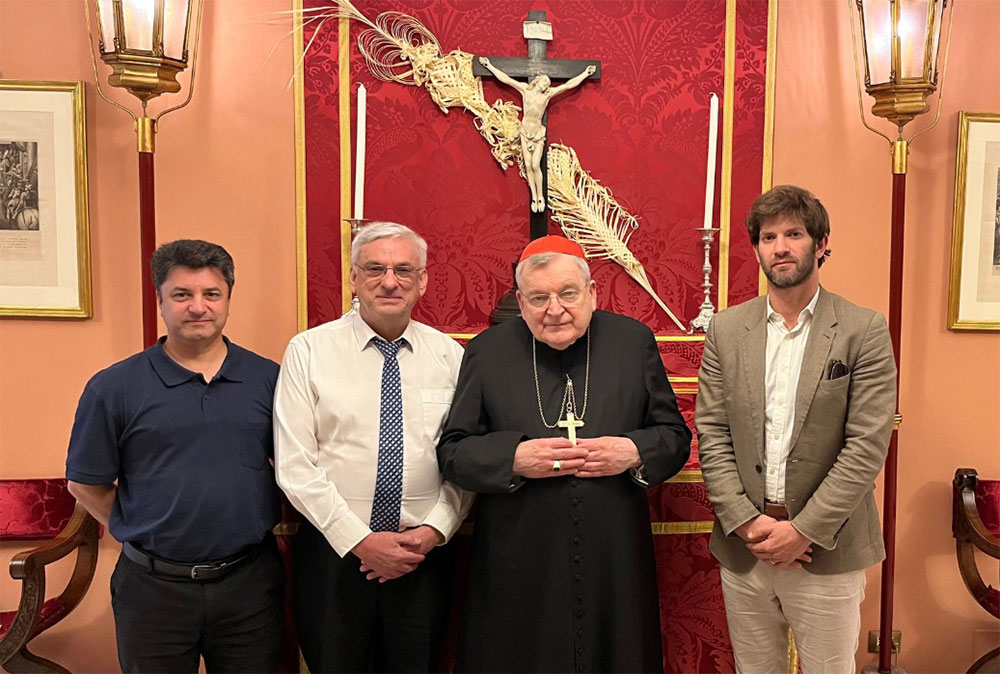
Armed with Letters of Introduction from our spiritual patron, His Excellency Julian Porteous, Archbishop of Hobart, and with a rolodex of expatriate priests, Vatican administrators and other supporters of Divine Mercy in the clergy, we were blessed to meet with Cardinal Breslin of South Africa (pictured below) and with Cardinal Burke (pictured), but due to time constraints, had to postpone scheduled meetings with other Cardinals until later in the year (see the other blog entry about those meetings, here).
Papal Inauguration Mass
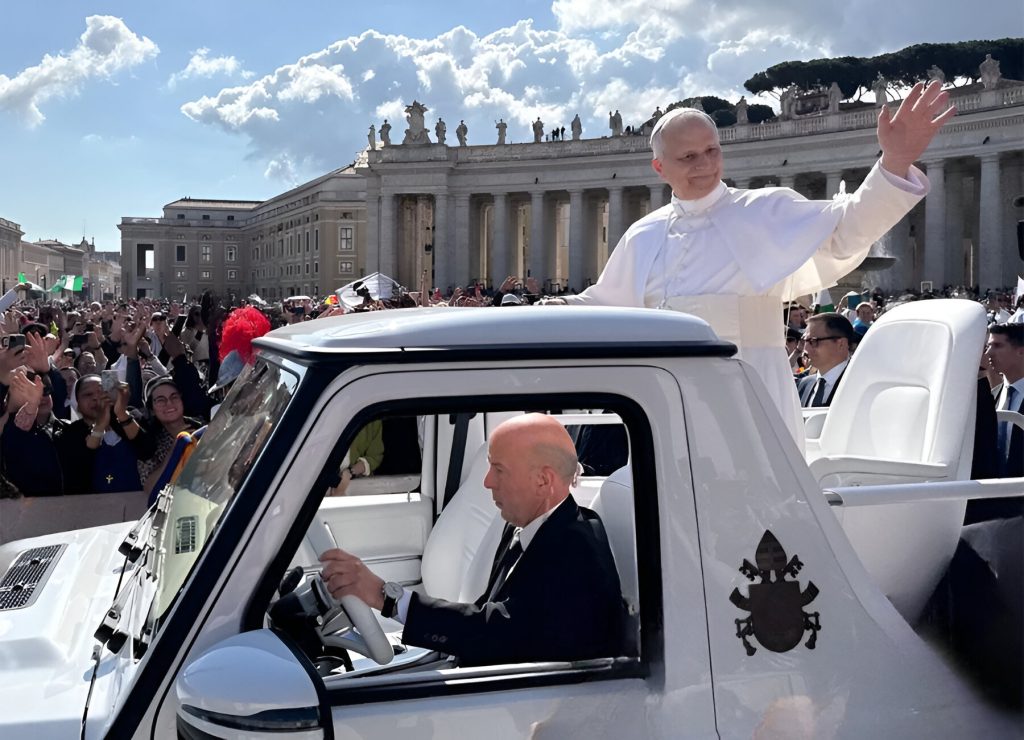
Rising at 6am on 18 May, the team found places in St Peter’s Square, joined by royalty, foreign political leaders, the Ecumenical Patriarch of Constantinople (the lead Patriarch of our Eastern Orthodox brothers), all of the world’s cardinals, many hundreds of priests and perhaps 200,000 participants. Pope Leo XIV processed through the square in an open-topped popemobile, before retreating within the bowels of the Basilica. The liturgy formally began at 10 a.m. at Saint Peter’s tomb underneath Bernini’s baldachin of the high altar. Surrounded by the patriarchs of the Eastern Catholic Churches, Leo incensed the tomb while the choir sang Palestrina’s ‘Tu es Petrus.’ Pope Leo returned to the vast public fully vested in a procession of cardinals from the baldachin to the ceremonial altar set up in front of the logia at the top of St Peter’s stairs.
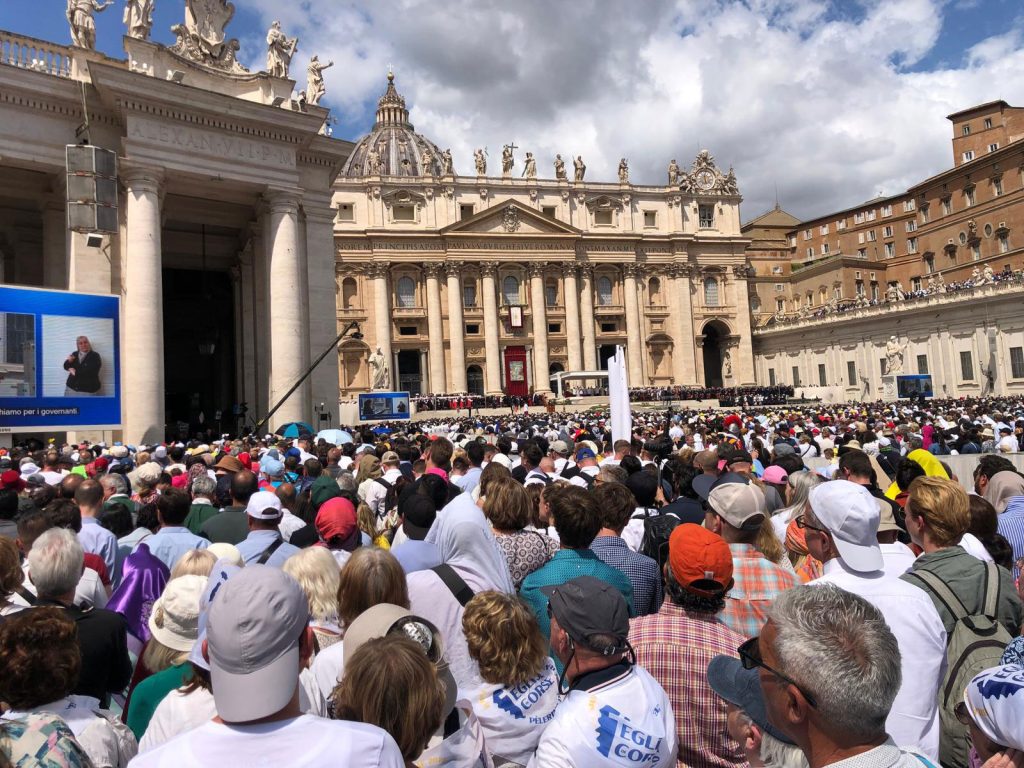
Pope Leo’s demeanour throughout was magnanimous, upright and calm but also sensitive, a fact which touched everyone as a sign of heavenly blessing and fortune for the immediate future of the Church. The ceremonial mass for such an unique moment, with all of its pomp and circumstance, worldwide television audiences and vast crowds, was nevertheless reverent, traditional and respectfully followed by all.
We look forward to more adventures ahead for our apostolate during the reign of Leo XIV, the 267th Bishop of Rome and Head of the Roman Catholic Church.